
Wildfire Smoke and Your HVAC: Filters and Air Cleaners for Bay Area Homes
Direct Answer: How to Shield Your Bay Area Home from Wildfire Smoke
To protect your household from hazardous Bay Area wildfire smoke, upgrade your HVAC system to a 4-inch deep-pleat MERV 13 media air cleaner and switch your thermostat fan mode from "Auto" to continuous "ON". Running the blower continuously forces all indoor air through the filtration media, capturing over 85% to 90% of dangerous PM2.5 combustion particulates. Crucially, avoid inserting restrictive 1-inch MERV 13 filters into standard return grilles, close all outdoor fresh-air ventilation dampers, and seal attic ductwork to prevent contaminated attic air from being pulled directly into bedrooms.
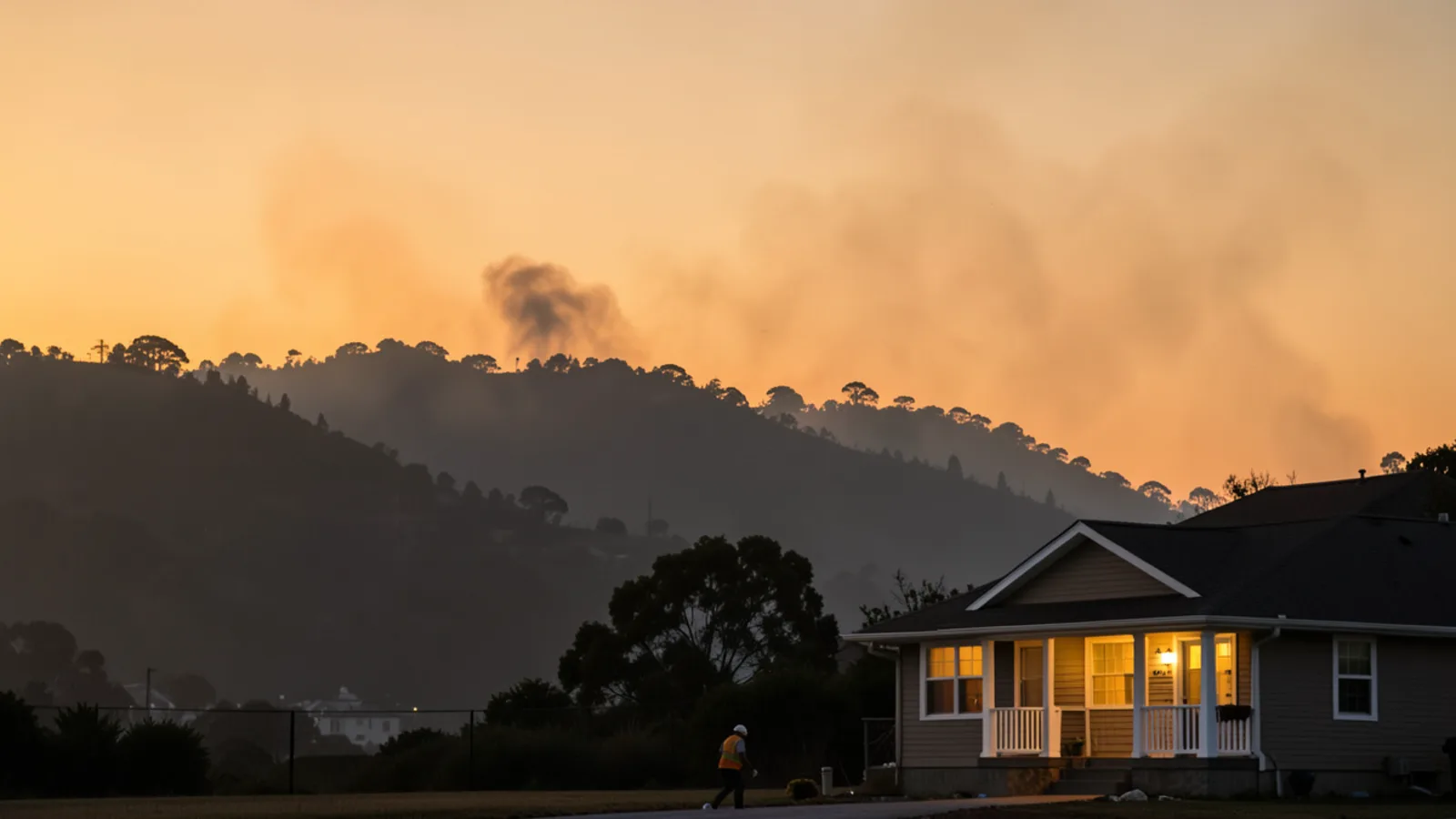
Over the past decade, late summer and autumn across Northern California have brought recurring wildfire smoke emergencies. For communities nestled against the foothills—including Campbell, Los Gatos, Saratoga, and San Jose—offshore Diablo winds push dense smoke plumes across the Santa Cruz Mountains and Diablo Range into the Santa Clara Valley basin.
During Bay Area Air Quality Management District (BAAQMD) Spare the Air episodes, outdoor Air Quality Index (AQI) readings frequently surge into the unhealthy purple and maroon tiers (exceeding 200 to 300+ AQI). When ambient air is hazardous to breathe, a properly sealed, high-filtration residential HVAC system serves as your family's primary life-safety shelter. Below is an engineering guide to filter selection, static pressure safety, whole-home purification, and emergency thermostat operation.
Need Professional HVAC Help in Campbell?
Our local team handles diagnostic troubleshooting, equipment sizing, and emergency repairs across the South Bay.
Understanding Smoke Aerosols: The Biological Threat of Microscopic PM2.5
Wildfire smoke is vastly more dangerous than common fireplace smoke or road dust. It represents a complex, toxic aerosol composed of superheated particulate matter, volatile organic compounds (VOCs), polycyclic aromatic hydrocarbons (PAHs), and toxic gases including benzene, formaldehyde, and acrolein.
The primary physiological threat comes from fine particulate matter measuring 2.5 microns or smaller in aerodynamic diameter (PM2.5). For comparison, a single human hair averages 70 microns in thickness—meaning roughly 30 PM2.5 particles can line up across the diameter of a single hair strand.
Because these microscopic particles are so tiny, human upper respiratory defenses (nasal cilia and mucosal linings) are completely incapable of intercepting them. Once inhaled, PM2.5 travels deep into the terminal alveolar sacs of the lungs, where it passes directly through cellular membranes into the bloodstream. This triggers systemic vascular inflammation, exacerbates asthma and chronic bronchitis, induces cardiac arrhythmia, and causes severe eye and throat irritation.
Filter Performance Breakdown: MERV Ratings, Static Pressure & Smoke Capture
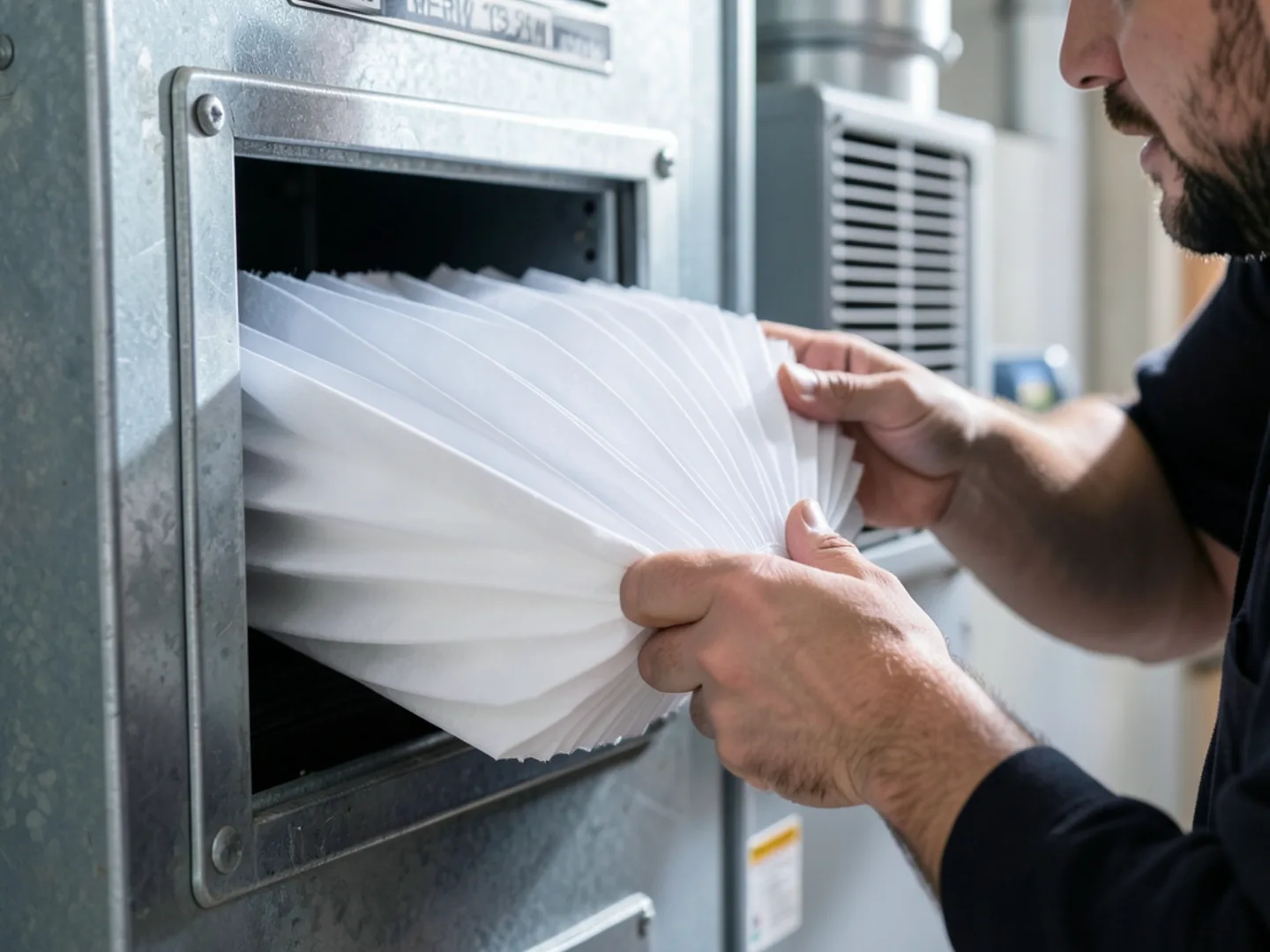
Air filtration media is classified under the ASHRAE 52.2 standard using the Minimum Efficiency Reporting Value (MERV) scale from 1 to 16. However, higher efficiency ratings also impose greater resistance to airflow (measured in inches of water column static pressure). The table below outlines real-world performance metrics across filter categories:
| Filter Type & Depth | MERV Rating | PM2.5 Smoke Capture Efficiency | Initial Static Pressure Drop | HVAC Equipment Impact & Usability |
|---|---|---|---|---|
| 1-Inch Spun Fiberglass | MERV 1 – 4 | < 5% PM2.5 captured | 0.05" to 0.10" W.C. (Very Low) | Protects blower fan blades from large hair/lint only; zero protection against smoke particles. |
| 1-Inch Standard Pleated | MERV 8 | 15% to 20% PM2.5 captured | 0.15" to 0.22" W.C. (Low) | Standard residential builder filter; captures pollen and dust mites but allows 80%+ of smoke to pass through. |
| 1-Inch High-Density Pleated | MERV 11 – 13 | 65% to 85% PM2.5 captured | 0.35" to 0.50"+ W.C. (Dangerously High) | Captures smoke particles but severely chokes airflow, risking ECM blower motor overheating and frozen evaporator coils. |
| 4-Inch Deep-Pleat Media Cabinet (Recommended) | MERV 13 | 85% to 92% PM2.5 captured | 0.18" to 0.24" W.C. (Optimal) | CDC/ASHRAE gold standard for wildfire smoke; massive surface area delivers hospital-grade capture with safe static pressure. |
| 5-Inch Carbon-Infused Deep Pleat | MERV 15 – 16 | 95%+ PM2.5 + VOC Adsorption | 0.22" to 0.28" W.C. (Low-Moderate) | Premium whole-home purification; captures sub-micron ash while activated carbon removes acrolein and burnt-wood odors. |
The 1-Inch MERV 13 Myth: Why Hardware Store Filters Endanger Equipment
During wildfire smoke alerts, South Bay homeowners frequently rush to hardware stores, purchase 1-inch MERV 13 filters, and wedge them into narrow filter return grilles. While well-intentioned, this common practice is one of the leading causes of mid-summer HVAC compressor breakdowns and blower motor burnouts.
To achieve a MERV 13 rating inside a shallow 1-inch frame, manufacturers must weave synthetic fibers into an exceptionally tight, dense mesh. Because the media has very little total surface area, this dense barrier acts like a brick wall to incoming airflow. Total external static pressure across the air handler often spikes above 0.80" to 1.0" W.C.—well above the manufacturer's safe design threshold of 0.50" W.C.
When airflow is choked, modern electronically commutated (ECM) blower motors run hotter and draw excessive amperage trying to push air, eventually suffering thermal failure. Furthermore, reduced airflow across the air conditioner's evaporator coil prevents refrigerant from absorbing sufficient indoor heat, causing the coil to drop below 32°F and encase itself in a block of ice.
The proper engineering solution is installing an inline 4-inch or 5-inch deep-pleated media air cleaner cabinet. Deep-pleat filters feature deep accordion folds that provide up to 30 to 40 square feet of filtration media surface area—roughly five times more surface area than a 1-inch filter. This allows your system to capture 90% of PM2.5 smoke particulates while maintaining smooth, unrestricted airflow.
Five-Step Wildfire Smoke Emergency Protocol for South Bay Homeowners
When regional BAAQMD monitors declare a Spare the Air alert and outdoor smoke descends into your neighborhood, execute this standardized five-step operating protocol immediately:
- 1. Set Thermostat Fan from "Auto" to Continuous "ON": The "Auto" setting only circulates air during active heating or cooling cycles (often only 15 minutes per hour). Switching the fan to continuous "ON" keeps your blower circulating indoor air 24/7 through your MERV 13 filter media, achieving 4 to 6 full air exchanges per hour.
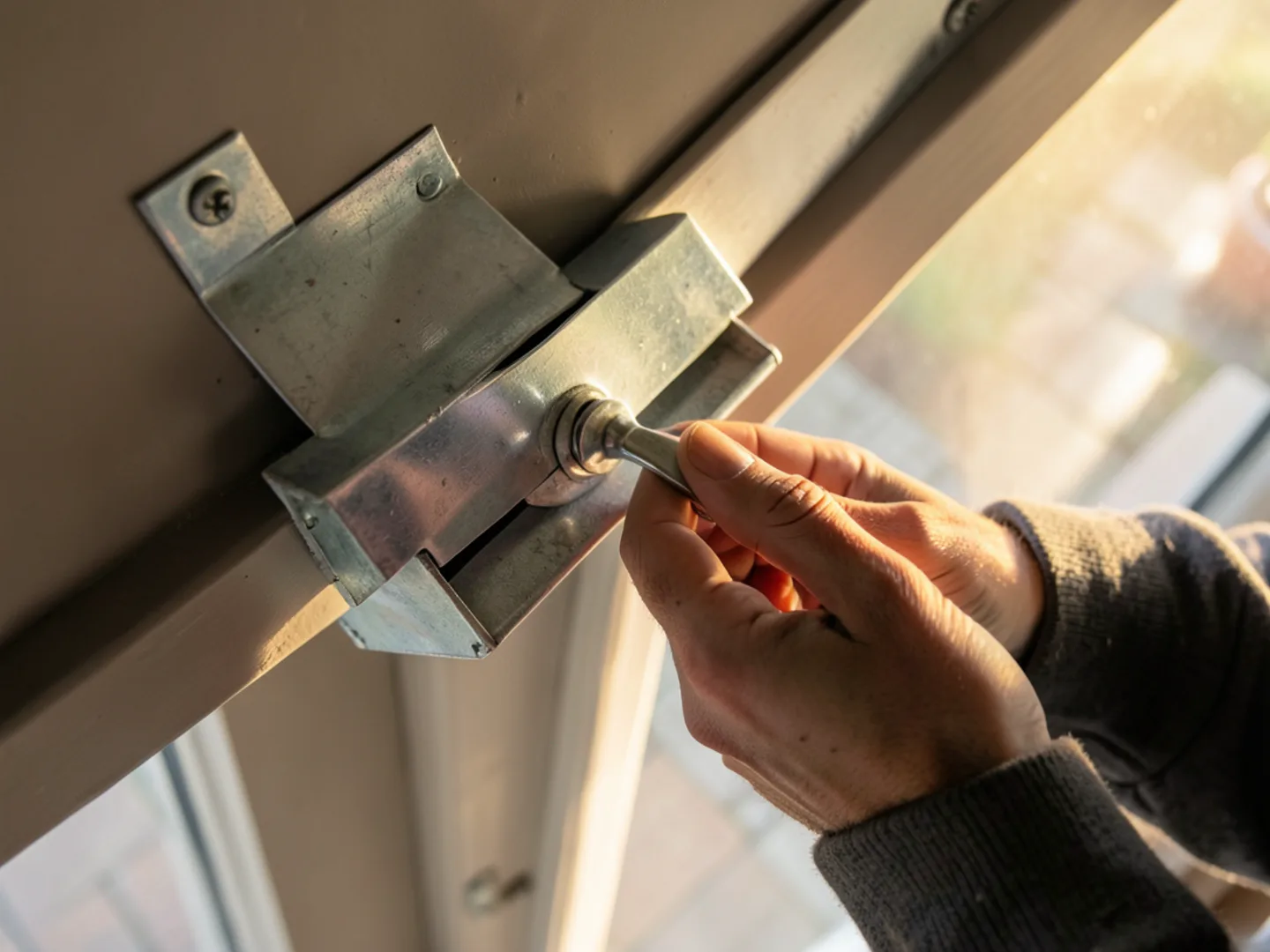
- 2. Isolate Fresh-Air Ventilation Dampers: If your home was constructed or remodeled under modern California Title 24 standards, it likely features a motorized fresh-air intake damper or Energy Recovery Ventilator (ERV). Locate the wall control or damper handle and shut it off to prevent pulling contaminated outdoor smoke into your ductwork.
- 3. Seal Exterior Envelopes: Keep all windows, sliding doors, and fireplace flues tightly shut. Weatherstrip exterior doors and avoid running kitchen range hoods or bathroom exhaust fans on high, which creates negative indoor pressure that draws smoke in through window cracks.
- 4. Deploy Secondary Active In-Duct Air Purification: If your system includes needlepoint bipolar ionization (NPBI) or photocatalytic oxidation (PCO), ensure the purifier is powered. The charged ions attach to fine soot particles, causing them to clump together so they are easily captured by your central filter media.
- 5. Inspect and Replace Filters Post-Event: After prolonged smoke events spanning several days, your filter media will be saturated with dark combustion soot. Always replace the filter cartridge once outdoor AQI normalizes to restore full airflow.
The Hidden Danger of Leaky Attic Ductwork During Smoke Emergencies
One of the most insidious ways wildfire smoke enters South Bay homes is through leaky attic ductwork. In older ranch homes built in Campbell, West San Jose, and Sunnyvale during the 1950s and 1960s, unsealed flex ducts and sheet-metal plenums frequently suffer from 20% to 30% air leakage.
Attics are unconditioned spaces directly ventilated to the outdoors through soffit, gable, and ridge vents. During smoke episodes, your attic cavity fills with thick, hot smoke reaching 130°F to 140°F. When your blower runs, leaks in the return ductwork create strong negative pressure that siphons toxic attic soot and fiberglass insulation particles directly into the conditioned air stream, discharging it straight into bedrooms.
Under California Title 24 Part 6 standards, PerformanceMech seals and replaces compromised ductwork, utilizing aerodynamic R-8 insulated ducting and fiber-reinforced mastic to achieve certified duct leakage below 10% (and often below 5%). A tightly sealed duct system ensures that only filtered indoor air circulates through your home.
Expert Field Insights: Real-Time Laser Particle Monitoring in Silicon Valley
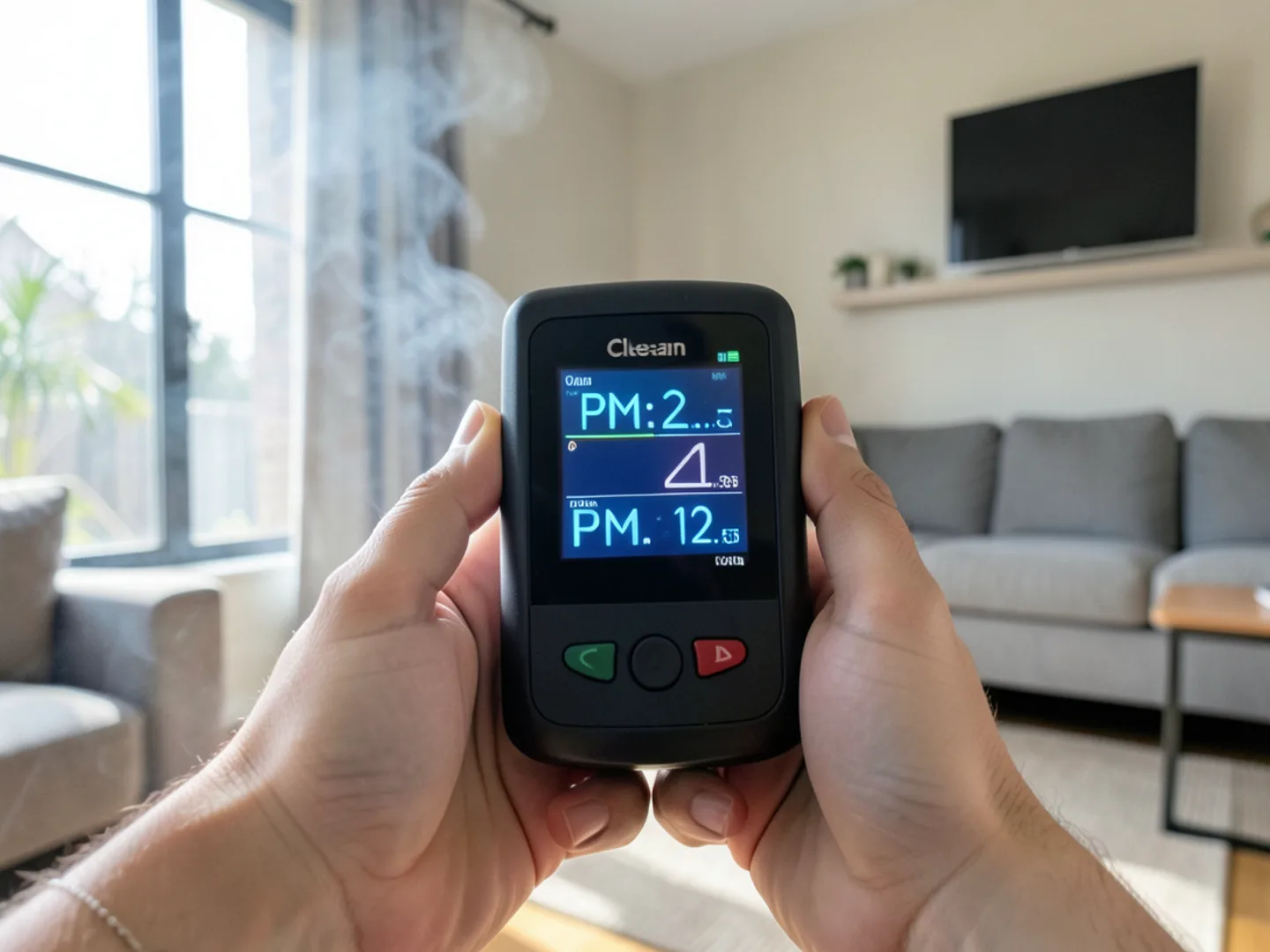
When assessing indoor air quality during wildfire events, our technicians use calibrated optical laser particle counters (such as Fluke or Temtop industrial air monitors) to measure real-time PM2.5 mass concentrations inside our clients' homes.
In poorly filtered homes running 1-inch hardware store filters with unsealed ducts, indoor PM2.5 levels often mirror outdoor ambient air—exceeding 120 to 180 µg/m³. In contrast, in homes where PerformanceMech installed a sealed R-8 duct network paired with a 4-inch MERV 13 media cabinet, indoor PM2.5 levels consistently remain below 5 to 10 µg/m³ (equivalent to pristine mountain air), even when exterior smoke is at hazardous 200+ AQI levels.
Frequently Asked Questions
Can I just put a 1-inch MERV 13 filter in my existing HVAC system during wildfire smoke?
No, this is strongly discouraged. Dense 1-inch MERV 13 filters create excessive static pressure drop that severely chokes airflow, overheating blower motors and causing air conditioning coils to freeze into solid ice. A 4-inch deep-pleated media cabinet is the proper engineering solution.
Should I set my thermostat fan to "ON" or "Auto" during a Spare the Air alert?
Always set your thermostat fan to continuous "ON". In "Auto" mode, air only filters when the system is actively cooling or heating. The "ON" setting circulates indoor air 24/7 through your high-efficiency MERV 13 filter media, continually scrubbing PM2.5 particulates from your living spaces.
Do central air conditioners pull outside wildfire smoke into the house?
No. Standard central split-system air conditioners recirculate indoor air—the outdoor condenser only circulates refrigerant, not outdoor air. However, if your home has an unsealed Title 24 fresh-air intake or leaky attic return ducts, contaminated outdoor smoke can be drawn inside.
How often should I change my HVAC filter during California wildfire season?
During active wildfire smoke episodes, inspect filters weekly. A 4-inch deep-pleat filter can typically handle several weeks of moderate smoke, but after major multi-day Spare the Air events, the filter cartridge should be replaced immediately once outdoor air quality normalizes.
Related Services & Coverage Areas
Editorial Note & Compliance Transparency
Rebate guidelines, local air district standards (such as BAAQMD Rule 9-4), and municipal permit requirements reflect policies in effect as of 2026-10-24. Utility incentive funding levels and program guidelines are subject to change by administering utilities. Always confirm current program requirements prior to final equipment purchase.