
Repair or Replace? When a 1990s Subdivision Furnace Is Done
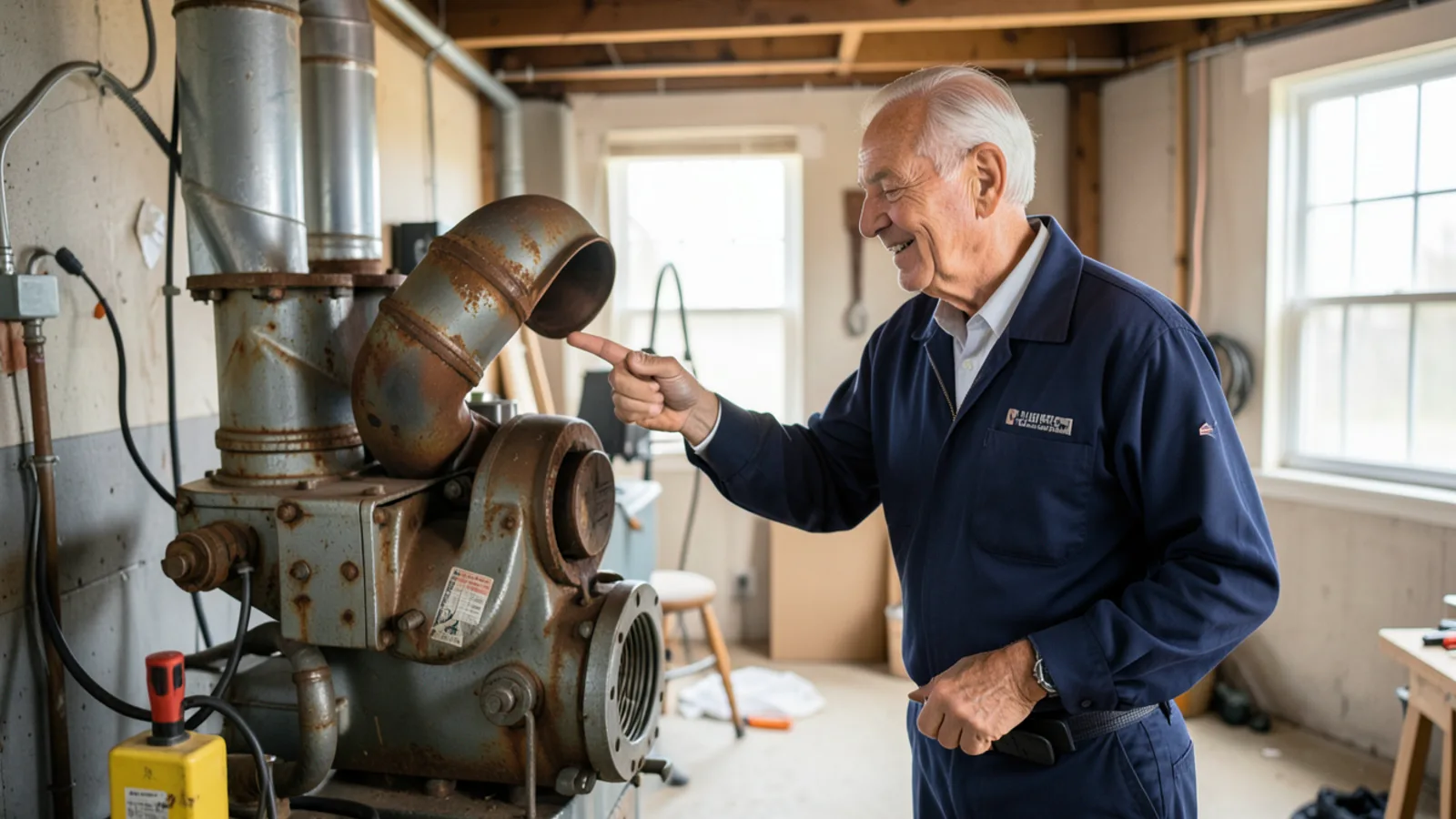
If your furnace is over 15 years old and the repair cost exceeds $600—or if the repair estimate multiplied by its age exceeds the industry's $5,000 rule—replacement is the safer, more economical choice. Any crack in the heat exchanger requires immediate replacement due to carbon monoxide risks. Call PerformanceMech at (321) 666-8870 for an honest diagnostic assessment.
The Mechanical Lifespan of Michigan Subdivision Heating Systems
Across the master-planned communities of South Lyon, Novi, Brighton, and Howell built during the residential housing boom of the late 1990s and early 2000s, hundreds of homes are still running their original builder-installed heating equipment. While standard builder-grade gas furnaces were engineered for an average mechanical life of 15 to 18 years, many of these units have reached 20 to 25 years of continuous service under harsh Michigan winter conditions.
Compounding Mechanical Fatigue After Two Decades
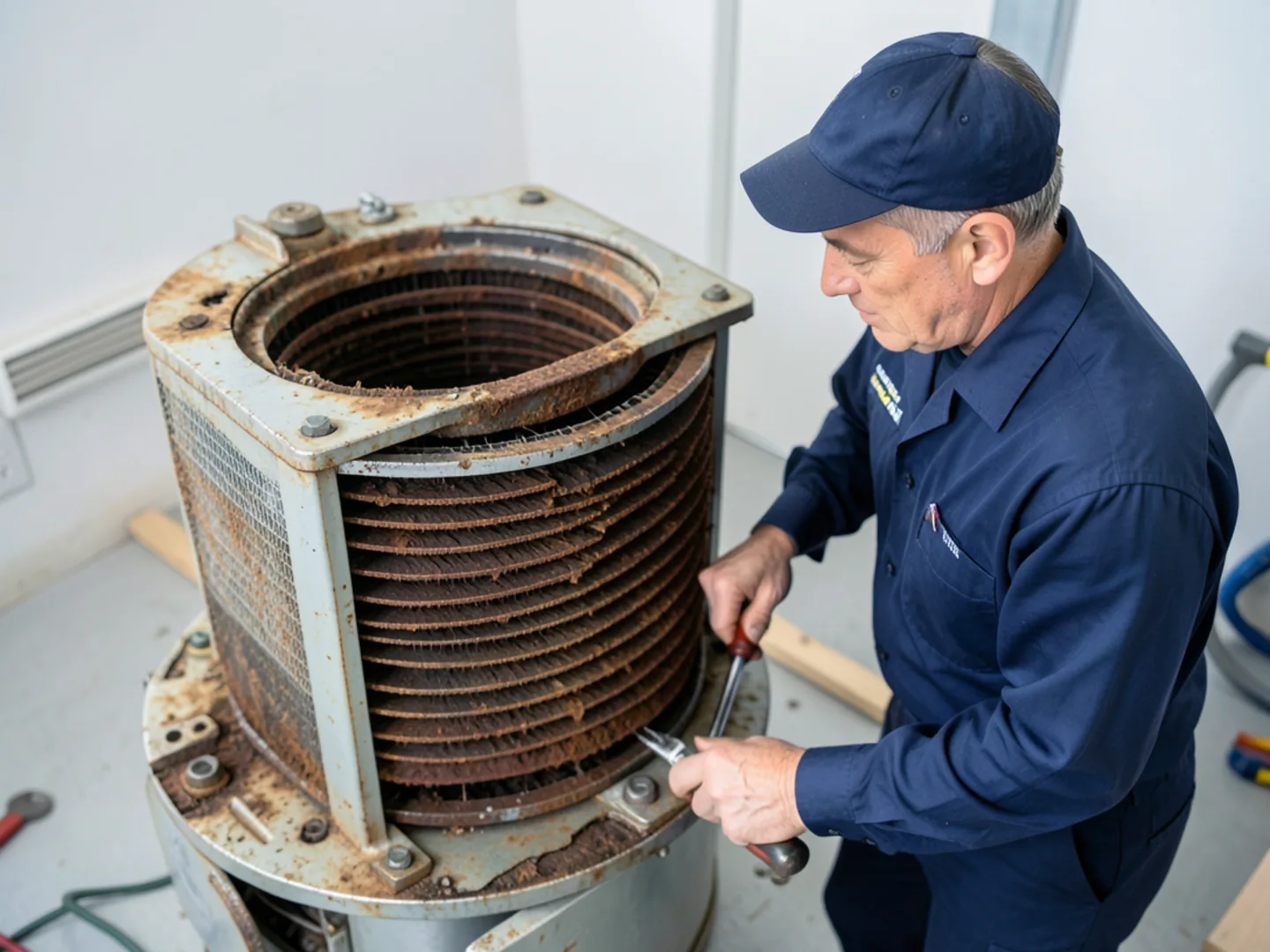
A gas furnace operating in Southeast Michigan fires between 1,200 and 1,800 hours every heating season, logging tens of thousands of thermal cycles. As units cross the 18-to-20-year threshold, electrical components become brittle, permanent-split capacitor (PSC) blower motors lose torque and overheat, and draft inducer fan bearings seize. When one major component fails on an aged system, sibling components frequently follow within 6 to 18 months.
The Reality of 'Builder-Grade' Equipment
Most homes constructed in late-1990s subdivisions were equipped with minimum-code single-stage 80% AFUE furnaces with galvanized clamshell heat exchangers. These units were sized according to rule-of-thumb square footage estimates rather than precise ACCA Manual J load calculations, resulting in chronic short-cycling that accelerates mechanical wear on igniters and gas valves.
Diminishing Return on Sunk Repair Costs
Homeowners often fall into the sunk-cost trap: spending $350 on an igniter last year, $450 on a pressure switch and flame rollout repair this year, and now facing a $900 draft inducer motor replacement. Continued investment in obsolete machinery quickly exceeds the cost of financing a modern, warrantied heating system that dramatically slashes monthly gas usage.
Need an Expert On Site at Your Home?
Our Brighton HVAC team provides prompt dispatch across Livingston County. Call (321) 666-8870.
The '$5,000 Rule' and Financial Threshold Formulas
To provide Michigan homeowners with an objective, mathematics-based decision tool free from technician guesswork, HVAC engineers rely on the proven '$5,000 Rule'. This formula balances equipment age against repair investment to identify the point of negative financial return.
How to Calculate the $5,000 Formula
Take the age of your furnace in years and multiply it directly by the total written estimate for the necessary repair (including parts and labor). If the product exceeds 5,000, replacement is virtually always the economically superior choice. If the result is comfortably below 5,000 and the heat exchanger passes visual inspection, proceeding with the repair is justified.
Real-World Scenario A: The Borderline 12-Year Unit
Consider a 12-year-old furnace in Brighton requiring a $350 hot surface igniter and flame sensor cleaning. Calculation: 12 years × $350 = 4,200. Because 4,200 is below 5,000, and assuming the heat exchanger has zero cracks or rust pinholes, executing the repair makes sound financial sense.
Real-World Scenario B: The 22-Year Subdivision Original
Consider a 22-year-old furnace in a South Lyon colonial requiring a new draft inducer motor assembly quoted at $850. Calculation: 22 years × $850 = 18,700. This dramatically surpasses the 5,000 threshold. Sinking nearly $900 into a 22-year-old appliance with brittle electronics and imminent heat exchanger fatigue is financially reckless.
The Critical Safety Line: Cracked Heat Exchangers & Obsolete Parts
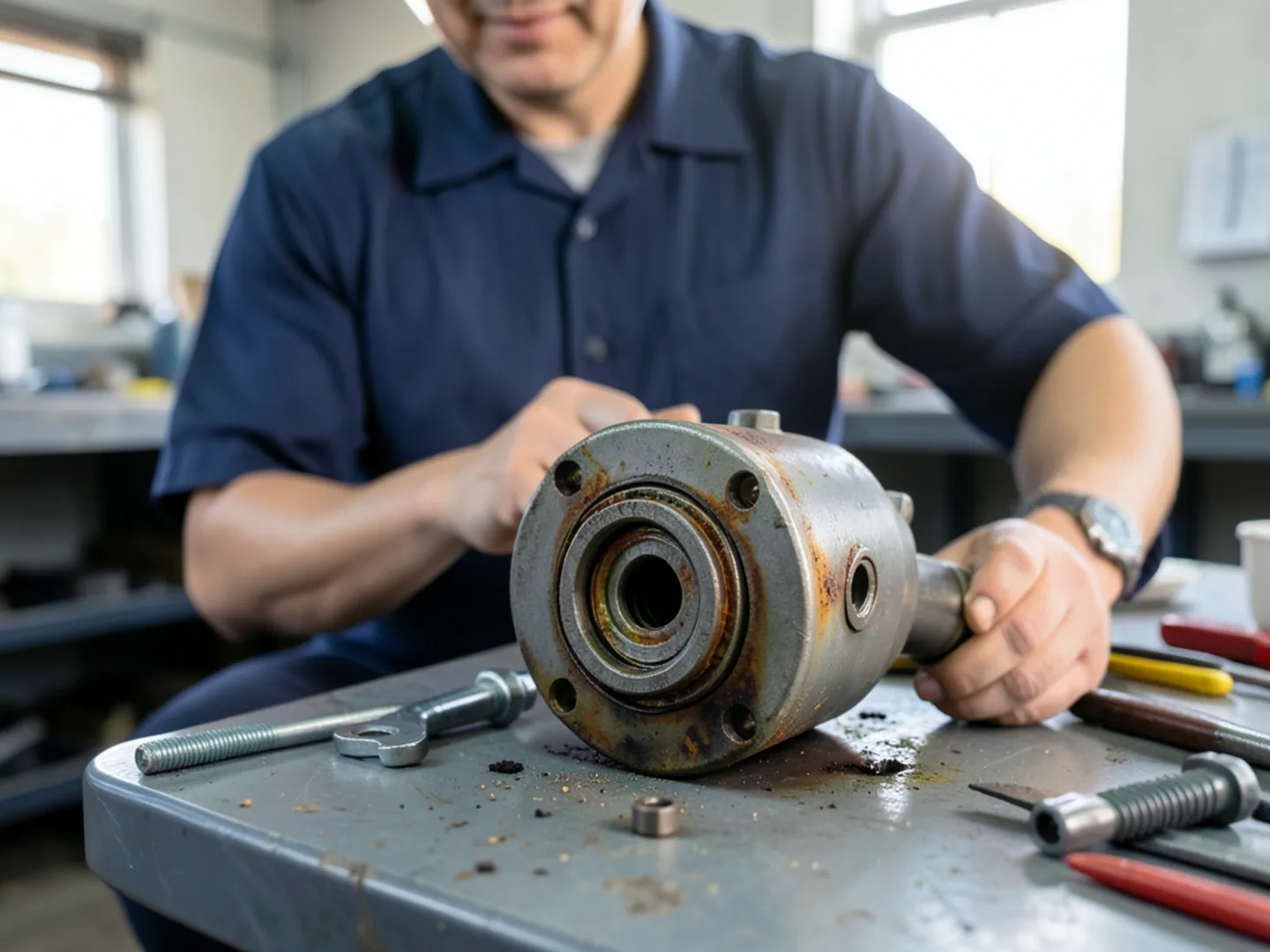
While financial formulas guide most heating decisions, certain physical conditions remove all ambiguity. When equipment safety is compromised or replacement components are obsolete, replacement becomes an immediate necessity.
Cracked Primary or Secondary Heat Exchangers
The heat exchanger is the steel boundary separating poisonous combustion exhaust (containing carbon monoxide, nitrogen dioxide, and sulfur dioxide) from the breathable air circulating into your family's bedrooms. If a licensed technician detects a crack, rust perforation, or breached seal using high-resolution optical borescopes or combustion analysis, the furnace cannot legally or safely be operated. Replacing a heat exchanger on an out-of-warranty furnace costs between $2,200 and $3,500—an expenditure that should always be redirected into new equipment.
OEM Component Obsolescence for Pre-2005 Systems
Manufacturers are legally required to maintain replacement parts for only 10 to 15 years following the discontinuation of an equipment line. For furnaces installed in the 1990s and early 2000s, critical proprietary parts—such as electronic integrated control boards, modulating gas valves, and specific draft inducer housings—are frequently obsolete or backordered indefinitely, leaving families without heat for weeks during winter freezes.
LARA Mechanical Safety Red-Tag Standards
Under Michigan Department of Licensing and Regulatory Affairs (LARA) mechanical codes, technicians who identify hazardous gas leaks or breached combustion chambers are mandated to shut off fuel supply and apply an official safety red tag. Operating a red-tagged appliance without certified correction voids homeowner insurance policies and exposes families to lethal carbon monoxide risks.
Diagnostic Decision Matrix: Repair vs. Replace by Furnace Age and Component
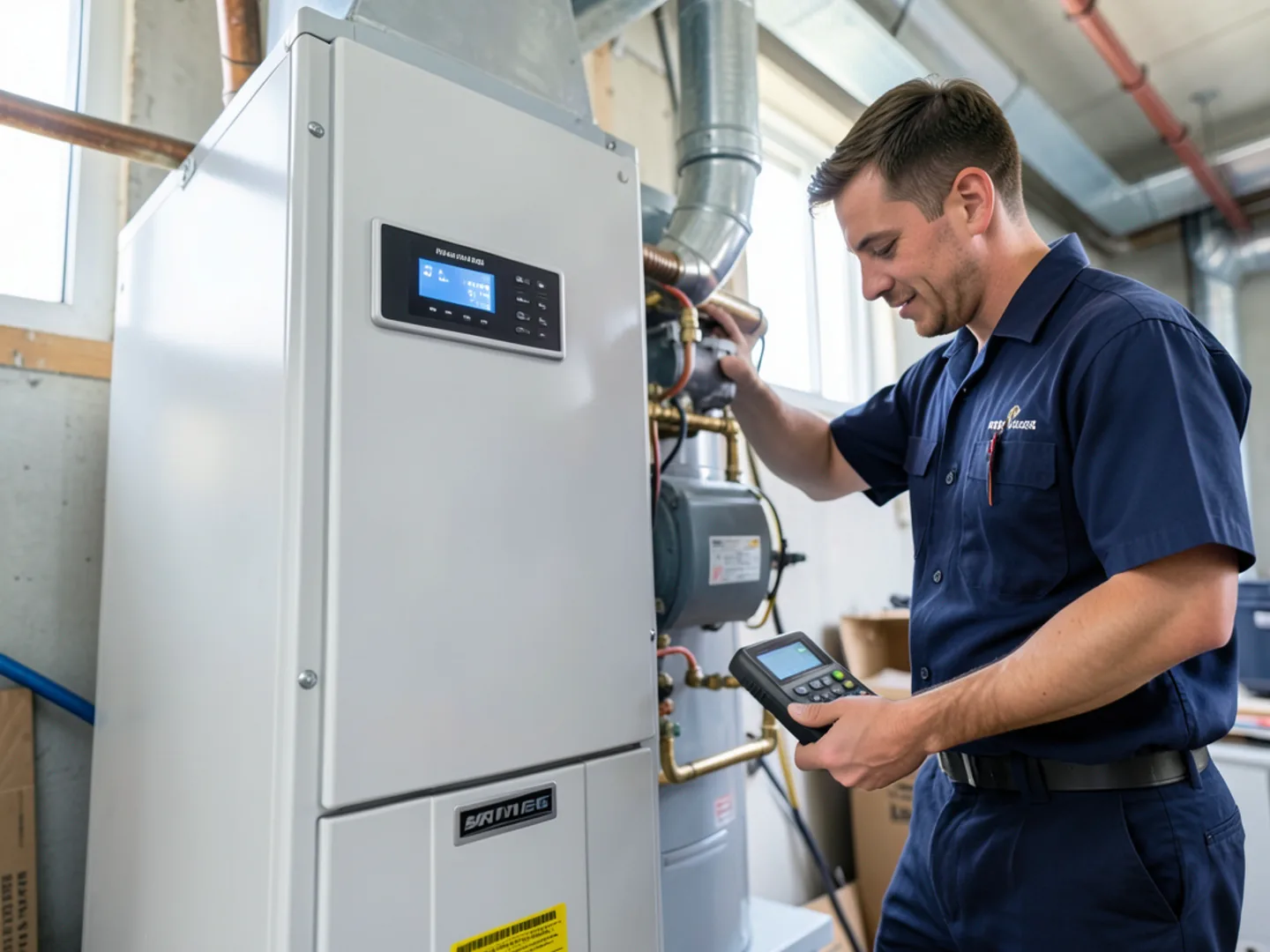
Use PerformanceMech's comprehensive diagnostic matrix to evaluate your furnace's specific symptoms, estimated repair costs, and equipment age against safety and long-term financial return.
| Furnace Age | Component Failure | Estimated Repair Cost | Recommended Action | Financial & Safety Rationale |
|---|---|---|---|---|
| Under 10 Years | Igniter, Flame Sensor, or Pressure Switch | $180 – $380 | REPAIR Immediately | Components are affordable and core heat exchanger is typically covered by manufacturer warranty. |
| 10 to 15 Years | Draft Inducer Motor or ECM Blower Motor | $650 – $1,250 | EVALUATE: Repair if well-maintained | Borderline case under $5,000 rule; technician must thoroughly inspect heat exchanger integrity first. |
| 15+ Years | Secondary Heat Exchanger Rust or Leakage | $1,800 – $2,800 | REPLACE Immediately | Carbon monoxide hazard and part obsolescence make major repair expenditures financially reckless. |
| 15+ Years | Cracked Primary Heat Exchanger Cell | Condemned / $2,500+ | REPLACE Mandatory | Michigan mechanical code requires red-tagging; replacement is necessary for life safety. |
| 18 to 25 Years | Repeated Annual Breakdowns ($400+/yr) | $400 – $900 annually | REPLACE Proactively | Diminishing returns; modern 96% replacement saves 20-25% on gas plus unlocks utility rebates. |
Efficiency Economics: 80% AFUE vs. 96% Variable-Speed Payback
Beyond avoiding repair bills, replacing an aging furnace permanently alters your home's monthly utility overhead. The efficiency leap between 1990s heating technology and modern condensing furnaces delivers substantial cumulative savings.
Eliminating the 20% Flue Loss of Legacy Systems
An original 1990s 80% AFUE furnace expels 20 cents of every heating dollar straight up the chimney as superheated waste exhaust. In contrast, a modern 96% AFUE condensing furnace extracts latent heat from exhaust water vapor, venting cool gasses through side-wall PVC pipes and delivering 96 cents of every fuel dollar directly into your living spaces.
Variable-Speed ECM Airflow Savings
Legacy furnaces utilize standard permanent-split capacitor (PSC) blower motors that consume 400 to 600 watts of electricity continuously. Modern furnaces feature electronically commutated motors (ECM) that consume as little as 40 to 80 watts—reducing annual electrical usage by up to $150 to $250 while eliminating hot and cold spots across multi-story colonial homes.
Cumulative 10-Year Fuel Savings Calculation
For a typical 2,400-square-foot home in Livingston or Oakland County consuming 900 to 1,200 therms of natural gas annually, transitioning from an aging 80% unit to a 96% two-stage system saves between $250 and $420 each winter. Over a 10-year period, cumulative gas and electrical savings can offset $3,000 to $4,500 of the replacement investment.
Long-Term Cost Analysis: Warranty Coverage, Rebates, and Reliability
The decision to replace an aging furnace is heavily sweetened by current utility incentives and modern manufacturer warranty protections that completely eliminate out-of-pocket repair risks for a decade.
10-Year Parts and Heat Exchanger Warranties
When you repair an out-of-warranty furnace, the replacement part typically carries merely a 30-day to 1-year limited warranty, leaving you exposed if a different component fails shortly thereafter. A newly installed furnace includes a comprehensive 10-year manufacturer limited warranty on all functional parts, plus 20-year or lifetime coverage on the stainless steel heat exchanger cells.
Stacking DTE, Consumers Energy, and IRA Tax Credits
Upgrading to qualifying high-efficiency equipment unlocks immediate cash-back incentives. DTE Energy and Consumers Energy offer rebates ranging from $400 to $900 for 96%+ AFUE furnaces. Combined with up to $600 in Federal Section 25C Energy Efficient Home Improvement Tax Credits, homeowners can reduce the net cost of replacement by $1,000 to $1,500.
Uninterrupted Winter Peace of Mind
The most significant value of a new heating system cannot be measured strictly on a spreadsheet: the certainty that your furnace will start reliably during a -10°F January blizzard when HVAC service companies face 48-hour emergency dispatch backlogs. Proactive replacement ensures your home and water pipes remain protected all winter long.
Field Diagnostic Advice from PerformanceMech Technicians
When inspecting 1990s and early 2000s furnaces throughout subdivisions in South Lyon, Novi, and Brighton, we often meet homeowners who have sunk $1,200 into minor repairs over consecutive winters before suffering a cracked heat exchanger. Sinking money into draft inducers and circuit boards on a 20-year-old furnace is like putting new transmission fluid into a car with 250,000 miles and frame rust. If the heat exchanger has rust flaking in the vestibule or the draft inducer is vibrating heavily, stop repairing—invest that money directly into a new 96% system backed by a 10-year parts warranty and local utility rebates.
Frequently Asked Questions
Common questions Michigan homeowners ask our technicians regarding this topic.
The $5,000 rule is an industry standard: multiply the furnace's age in years by the estimated repair cost in dollars. If the total exceeds $5,000, replacement is the more economical decision. For example, an $800 repair on an 18-year-old furnace equals $14,400—far above the threshold—indicating that continuing to repair an obsolete system is financially unwise.
PerformanceMech Technical Team
Licensed Michigan Mechanical & Hydronic Specialists serving Livingston, Oakland & Washtenaw Counties.
Related Professional Services
Related Service Areas Covered
Have Heating or Cooling Trouble Today?
Call PerformanceMech Heating & Air at (321) 666-8870. Live phone response and rapid dispatch from our Brighton hub.