
No Heat in a Michigan Cold Snap: What to Do Before the Technician Arrives
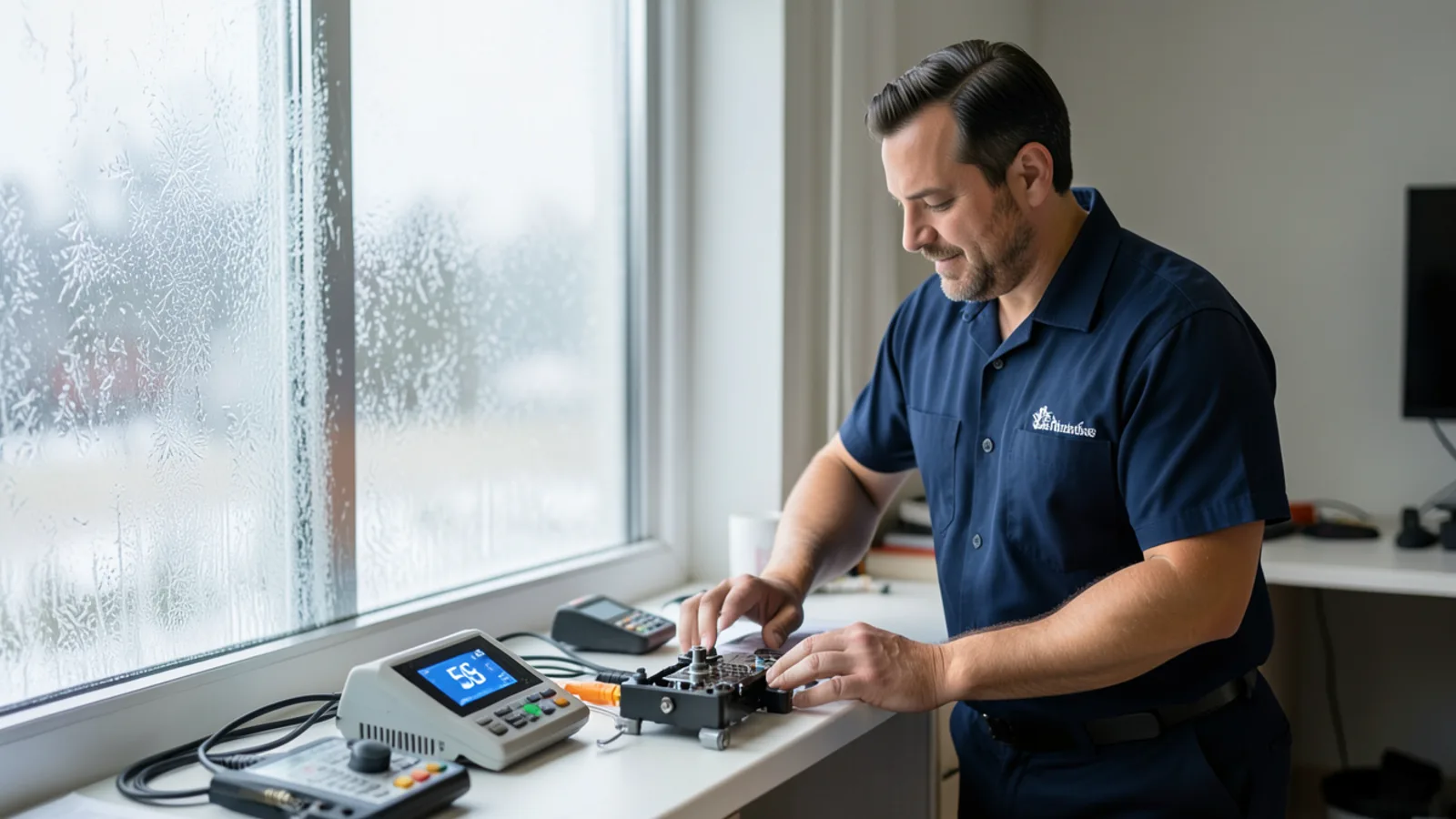
If your furnace suddenly stops working during a Michigan sub-zero freeze, verify immediately that your thermostat is set to HEAT with fresh batteries, confirm the emergency furnace power switch is ON, check your electrical breaker panel, and clear any blowing snow or ice choking outdoor PVC exhaust pipes. If the system still fails to ignite or smells like sulfur, call emergency HVAC dispatch immediately at (321) 666-8870.
Immediate Safety Protocols: Gas Odors vs. Mechanical Failures
Before touching the thermostat or examining the mechanical room, perform an immediate sensory check. When a heating system breaks down during a harsh Southeast Michigan winter freeze, distinguishing between an electrical trip and a combustible gas hazard is a matter of life safety.
If you detect the distinctive rotten-egg odor of mercaptan (the sulfur-based odorant blended into natural gas and liquid propane), treat the situation as an active emergency. Do not switch lights on or off, do not operate garage door openers, do not unplug appliances, and do not attempt to light matches or candles. Any small spark across an electrical contact can ignite concentrated gas pockets. Immediately evacuate all household members and pets from the structure, leave the front door open behind you to dilute accumulating fumes, and call your utility provider—either DTE Energy at 800-947-5000 or Consumers Energy at 800-477-5050—along with 911 from a mobile phone safely outside the building.
If you hear your home's hardwired or battery-operated carbon monoxide (CO) alarms sounding, evacuate the premises immediately without delay. Carbon monoxide is an invisible, odorless byproduct of incomplete fuel combustion. In Michigan cold snaps, cracked cast-iron or tubular steel heat exchangers can leak lethal CO concentrations directly into the supply airstream when forced-air blowers energize. Never silence a sounding CO alarm and return to bed; emergency medical assessment and fire department gas-sniffing protocols are essential.
If there is no odor of gas, no hissing sound near the gas manifold, and no active CO alarm sounding, you can safely proceed through non-invasive electrical and airflow diagnostic steps.
Zero-Spark Evacuation Rule
Never flip light switches or toggle circuit breakers if you suspect a combustible gas leak. Even the miniature internal contact arc of a wall switch can trigger a vapor explosion in confined basements.
Need an Expert On Site at Your Home?
Our Brighton HVAC team provides prompt dispatch across Livingston County. Call (321) 666-8870.
Step-by-Step Electrical & Thermostat Troubleshooting Checklist
A substantial percentage of mid-winter no-heat service calls across Brighton, Howell, and Hartland stem from simple control circuit interruptions rather than catastrophic mechanical failures. Work through these systematic checks before calling for emergency service:
1. Thermostat Display, Batteries, and Mode Verification
Begin directly at the thermostat wall unit. If the digital display is completely blank, remove the faceplate and replace the internal alkaline AA or AAA batteries immediately. Modern digital stats rely on battery voltage to close their internal 24-volt heating relays. Next, verify that the system switch is set firmly to HEAT—not OFF or COOL. Raise the setpoint temperature at least 5°F above the current room temperature reading to force an active call for heat from the control board. If your system uses a smart thermostat (such as a Google Nest or ecobee), check that an automated 'Eco' or 'Away' geofencing routine has not overridden your scheduled heating program.
2. Furnace Circuit Breaker and Emergency Service Switch
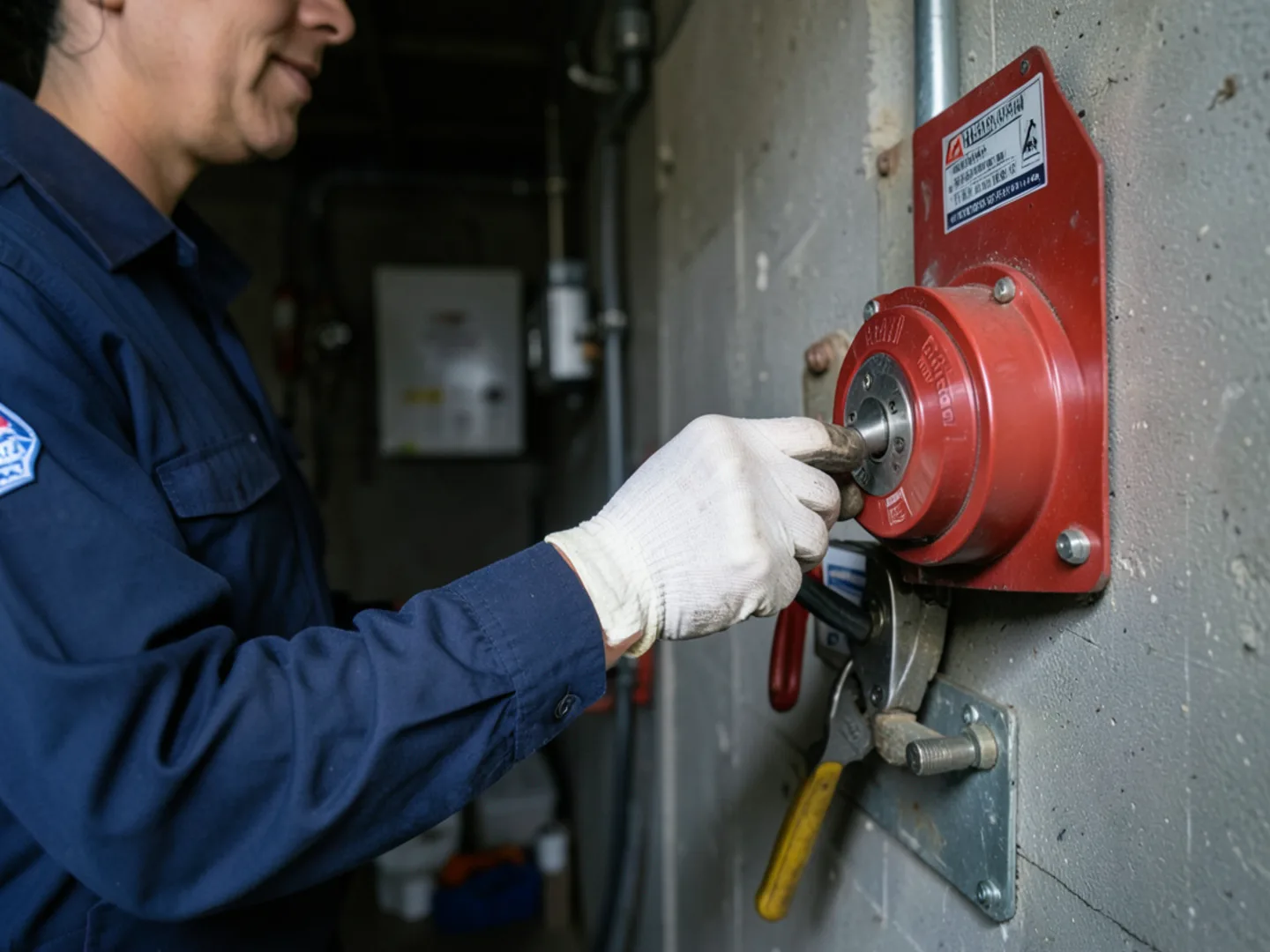
Navigate to your home's main electrical service panel. Locate the dedicated 15-amp or 20-amp single-pole circuit breaker labeled 'Furnace' or 'Heating'. In older homes or during power surges, breakers can trip into an ambiguous neutral middle position. Firmly push the breaker handle completely to the OFF position until it clicks, then snap it firmly back into the ON position. Next, inspect the emergency power switch located adjacent to your furnace or at the top of the basement stairway. In many Michigan residences, this switch resembles a standard light switch—often fitted with a red cover plate labeled 'Furnace Emergency'. Confirm that family members or service personnel have not accidentally switched this control to OFF.
3. Air Filter Airflow Restriction and High-Limit Tripping
A heavily choked 1-inch fiberglass or pleated air filter is a leading trigger of emergency furnace shutdowns during extended cold spells. When dust, pet dander, and airborne debris blind the filter surface, the circulating blower cannot push adequate air across the primary heat exchanger cells. As internal plenum temperatures surpass 170°F–200°F, the primary high-limit bimetal safety switch snaps open, instantly de-energizing the gas valve to prevent a structure fire while keeping the blower running to blow cold air. Slide out the filter; if dark gray and caked with dust, remove it temporarily during your diagnostic test to see if normal burner ignition resumes.
4. Exterior Direct-Vent PVC Intake and Exhaust Terminations
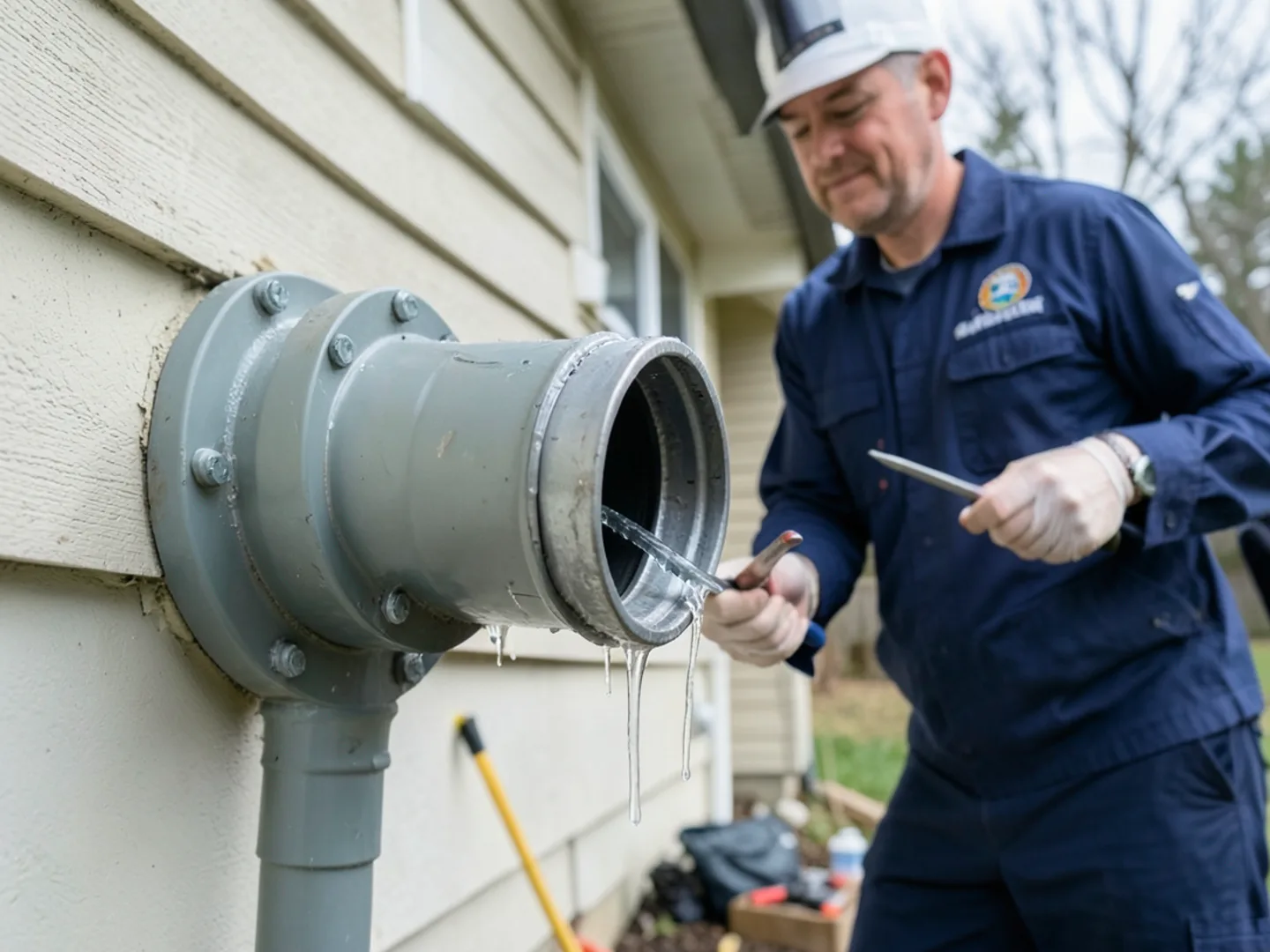
For modern 90%+ high-efficiency condensing furnaces venting through white PVC or polypropylene pipes on the exterior rim joist, walk outside and inspect the termination elbows. During heavy Michigan snowfall and blizzard conditions, wind-driven drifts can bury the intake or exhaust pipes. Furthermore, freezing moisture dripping from gutters can create dense icicle dams across pipe hoods. When exhaust gases cannot vent freely or combustion air is choked, the internal differential pressure switch detects a draft failure and locks out the burner sequence.
Understanding Control Board Flash Codes & Ignition Sequences
Modern residential furnaces are governed by an integrated microprocessor control board located inside the lower blower compartment. Understanding the mechanical sequence of operation helps pinpoint where your system is stalling:
Every modern gas furnace follows a rigid safety sequence upon receiving a 24-volt call for heat from the thermostat: First, the draft inducer blower motor energizes to purge residual combustion gases through the exhaust chimney. Second, a sensitive diaphragm pressure switch closes, confirming that adequate negative draft exists. Third, the silicon carbide or silicon nitride hot surface igniter receives 120 volts, glowing bright cherry red (or a spark generator clicks rapidly). Fourth, the main gas valve clicks open, allowing fuel into the burner tubes where it ignites across the flame ribbon. Fifth, an insulated flame sensor rod detects microamp rectification current flowing through the ionized flame. Finally, after a 30- to 45-second heat exchanger warm-up delay, the primary indoor blower motor energizes to distribute warm air throughout your ductwork.
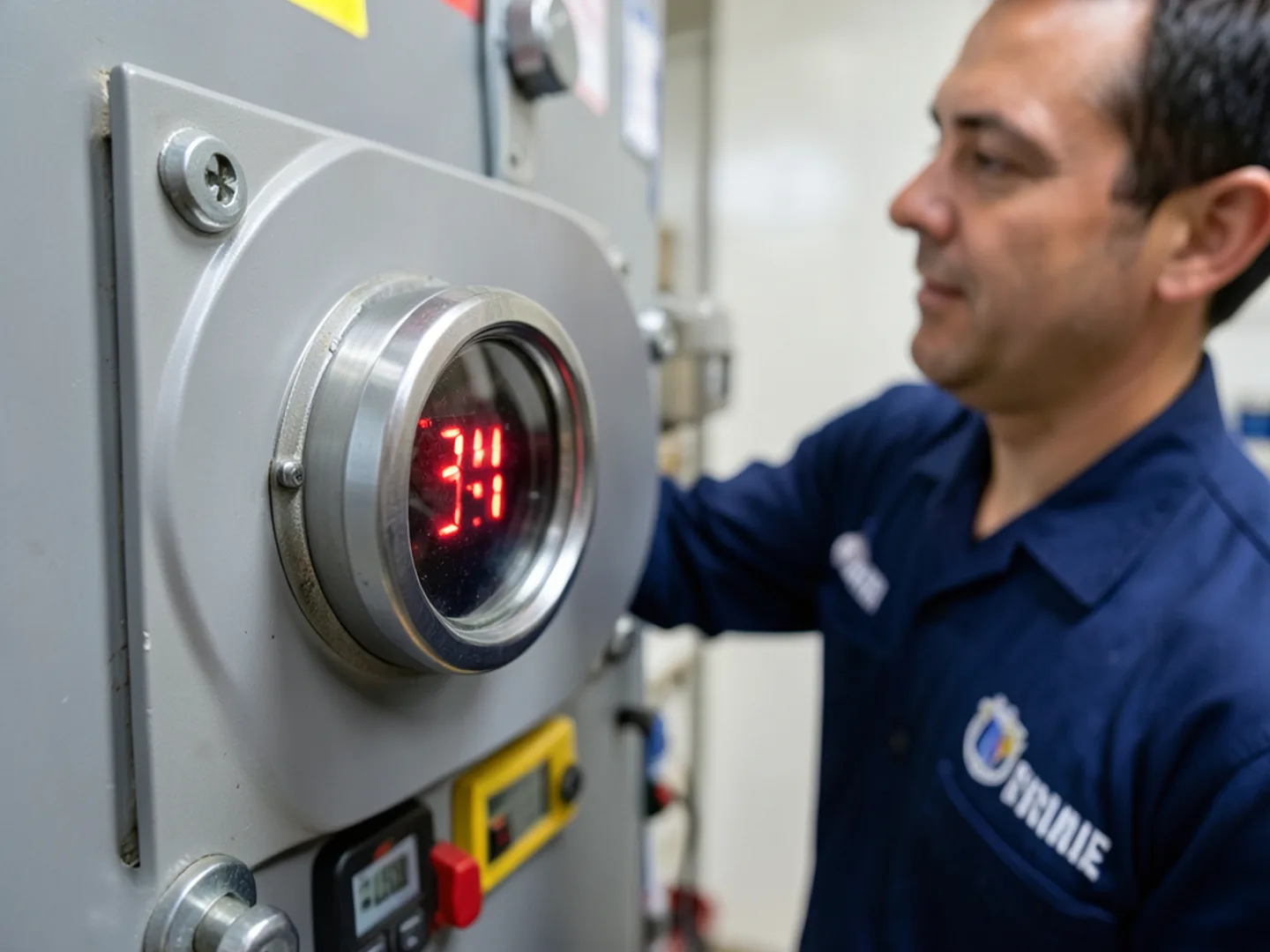
If the furnace stalls at any point during this sequence, the control board halts ignition and flashes a diagnostic LED indicator through a clear sight glass in the lower cabinet door. Most manufacturers (including Carrier, Trane, Lennox, Goodman, and Rheem) utilize specific flash cadences: a steady rapid flash indicates normal standby; two flashes commonly signal a stuck-open pressure switch or blocked vent; three flashes indicate an ignition failure or dirty flame sensor lockout; and four flashes indicate a tripped primary high-limit switch. Note the number of flashes before cycling power, as this diagnostic code provides invaluable information to your responding technician.
Plumbing Freeze Prevention During Sub-Zero Polar Vortex Nights
While awaiting emergency HVAC dispatch during a sub-zero cold snap, your immediate tactical goal is preventing domestic water supply lines from freezing, expanding, and splitting inside exterior walls:
Open all vanity, sink, and kitchen cabinet doors along exterior walls. Allowing warm ambient air from the main living spaces to circulate freely around uninsulated copper and PEX water lines significantly delays ice crystal formation.
Set faucets positioned on exterior walls to a slow, steady pencil-lead trickle. Flowing water carries thermal energy and resists freezing under pressure; the continuous movement prevents stationary ice plugs from bridging pipe diameters.
Keep all interior bedroom and bathroom doors fully open to distribute remaining thermal energy evenly throughout the floor plan. If your home has a finished basement with a secondary zone, ensure basement supply registers remain unobstructed.
If you possess electric space heaters, operate them with extreme caution. Plug them directly into wall receptacles rather than extension cords, keep them at least three feet away from bedding and draperies, and position them in vulnerable plumbing zones such as crawlspace access points or utility rooms.
Never utilize outdoor liquid propane torpedo heaters, charcoal barbecues, camping stoves, or your kitchen gas oven for indoor emergency heating. These open-flame devices consume oxygen rapidly and emit lethal concentrations of carbon monoxide.
Critical Freeze Threshold
When indoor ambient temperatures fall below 40°F, water expands by approximately 9% as it solidifies. The resulting hydraulic pressure can easily burst copper solder joints and PEX crimp fittings, creating catastrophic flood damage when temperatures thaw.
Symptom & Triage Matrix: Causes and Homeowner Action Steps
Use this comprehensive diagnostic matrix to identify your furnace's exact failure mode and determine the appropriate corrective measure:
| Furnace Symptom | Likely Technical Cause | Safe Homeowner Action | Professional HVAC Repair Required |
|---|---|---|---|
| Blower fan runs constantly, but vents blow cool air | High-limit switch tripped due to severe airflow restriction | Inspect and replace clogged 1-inch or 4-inch air filter | Test bimetal limit switch resistance and blower motor capacitor |
| Furnace clicks 3 times, igniter glows, but flame never lights | Defective 24V gas valve solenoid or closed gas shutoff valve | Verify yellow manual gas valve handle is parallel to gas pipe | Test manifold gas pressure with manometer and replace gas valve |
| Burners light for 3-5 seconds, then immediately shut off | Oxidized flame sensor rod unable to conduct microamp signal | Carefully polish flame sensor rod with fine emery cloth | Test flame rectification circuit (minimum 1.5–2.0 microamps required) |
| Draft inducer motor hums loudly but will not spin | Seized inducer sleeve bearings or foreign object in wheel | Switch furnace power OFF to prevent motor winding burnout | Replace draft inducer assembly and check flue vent draft pressure |
| Control board LED blinks 2 or 3 flashes continuously | Pressure switch open, cracked vacuum tube, or frozen PVC vent | Check exterior exhaust/intake pipes for snowdrifts and icicles | Flush internal condensate trap, test switch pull-in inches W.C. |
| No sounds, no lights on control board, total silence | Tripped circuit breaker, blown 3A low-voltage fuse, open door switch | Reset breaker; firmly push blower door panel into safety interlock | Diagnose 24V control transformer short circuit and board failure |
When to Call for Priority Emergency Dispatch in Livingston County
If basic electrical resets, air filter replacement, and exterior vent clearing do not restore steady burner operation within 15 minutes, your furnace has entered an internal lockout condition that requires professional technical instrumentation.
Attempting repeated electrical resets when an internal component has failed can damage sensitive electronics on the integrated control board or overload the ignition transformer. PerformanceMech maintains dedicated, 24/7 priority emergency dispatch vehicles stationed right off Grand River Avenue in Brighton, allowing rapid highway transit across Howell, Hartland, South Lyon, Pinckney, and surrounding communities.
Our service vehicles are fully stocked mobile warehouses carrying universal hot surface igniters, draft inducer motors, pressure switches, 24-volt transformers, contactors, dual run capacitors, and digital combustion analyzers to diagnose and resolve your heating outage on the initial visit.
Why Cycling the Power Switch Only Masks the Root Mechanical Defect
When homeowners flip their furnace emergency power switch OFF and ON, the integrated control board clears its soft lockout memory and initiates three fresh ignition trials. While this may temporarily restart the burners for 10 to 30 minutes, it does not repair the underlying defect—such as an oxidized flame rectification rod dropping below 1.5 microamps, an aging inducer motor drawing excessive running load amps, or an acidic condensate trap backing up water into the pressure switch vacuum port. Repeatedly resetting a locked-out furnace strains the control board relays and frequently leads to a total hard lockout in the middle of a sub-zero night.
Frequently Asked Questions
Common questions Michigan homeowners ask our technicians regarding this topic.
A well-insulated Michigan home built to modern energy standards will typically maintain safe indoor temperatures above 50°F for approximately 8 to 12 hours after the furnace quits. However, in older homes with fieldstone foundations, drafty window assemblies, or unconditioned crawlspaces, indoor temperatures can drop into the plumbing-freeze danger zone (below 40°F) in as little as 4 to 6 hours during high-wind winter events.
PerformanceMech Technical Team
Licensed Michigan Mechanical & Hydronic Specialists serving Livingston, Oakland & Washtenaw Counties.
Related Professional Services
Related Service Areas Covered
Have Heating or Cooling Trouble Today?
Call PerformanceMech Heating & Air at (321) 666-8870. Live phone response and rapid dispatch from our Brighton hub.